
Now the worst of the storms have quietened (at least for a while) we’ve a short window before the birds start nesting (and they’re already getting a bit rowdy) to get on with winter coppice works, clearing the largest chunks of fallen wood and preparing wood for seasoning and storing.
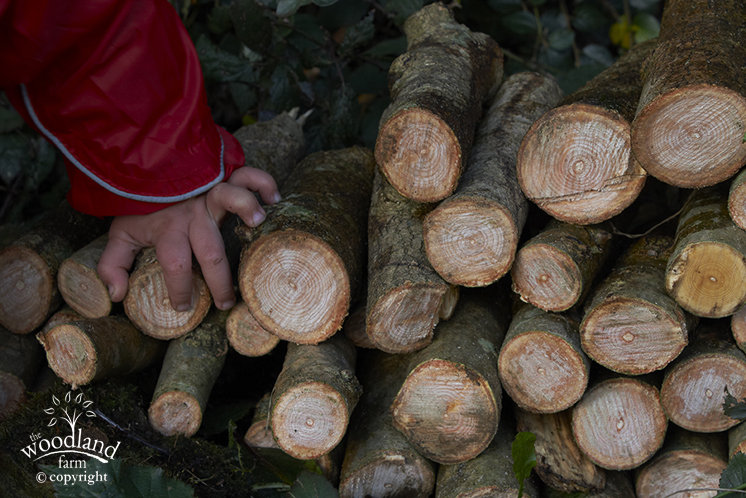
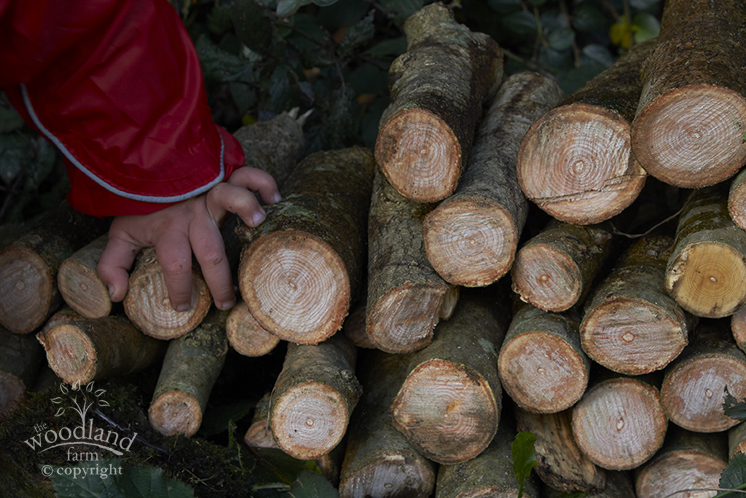
The idea of seasoning is to reduce moisture content making it more useful as a fuel for burning. Wood goes through these three stages 1) fresh-felled 2) air-dry 3) house-dry.
After felling, wood should ideally be moved to an open spot away from the canopy where it can be stacked off the ground and get plenty of air circulation. Our two-year old chose this spot in the garden – open to wind but covered from rain.

Fine-grained hard woods like oak, beech, sycamore and hornbeam need seasoning for at least two summers and a winter. Faster growing trees such as ash, birch and poplar, together with most conifers can usually be seasoned in one season (depending on weather). Western Hemlock needs longer. Seasoning can be quicker if you split and cover logs soon after felling. When logs reach 20% moisture content then they can be used.
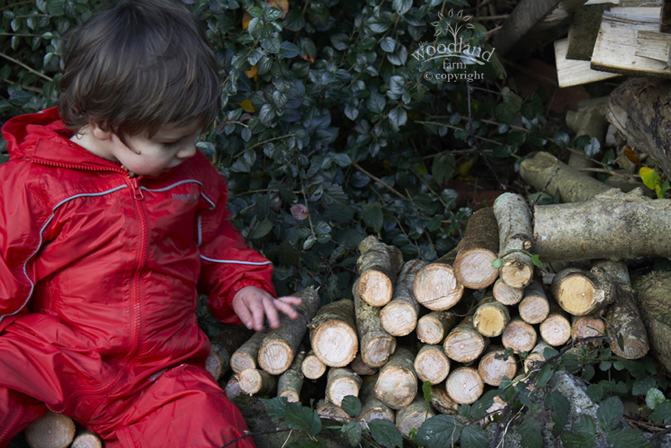
Stacking logs is an ideal sorting exercise for children!