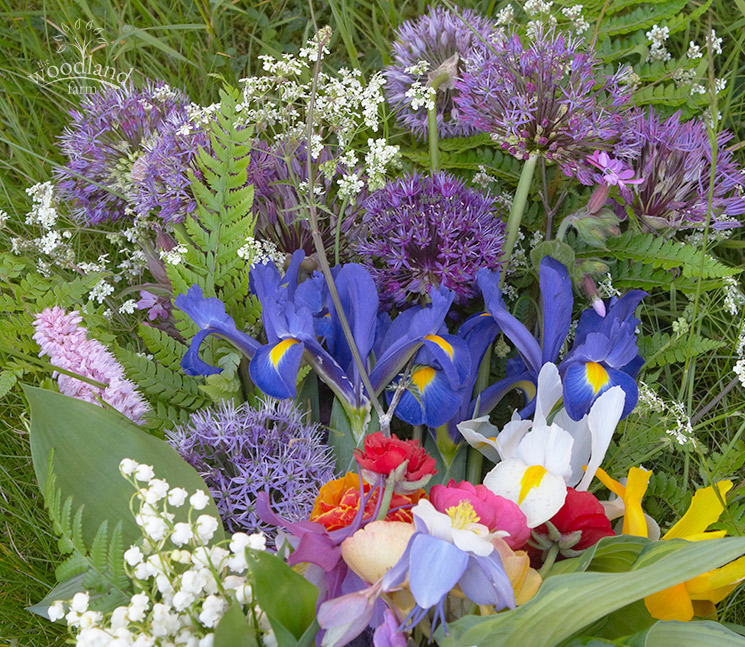
One of the mainstays of work for us at the moment is running trial-plantings of flowers that we think are most likely to suit our conditions for the cut flower market. We knew that roses would do well – our woods and field margins are full of wild dog rose. This suggests there’s plenty of the mycorrhizal fungi that supports rose health but what of other flowers? Should we invest in masses of bulbs or foliage plants, stems or blooms? Here’s a few of our experimental findings so far…
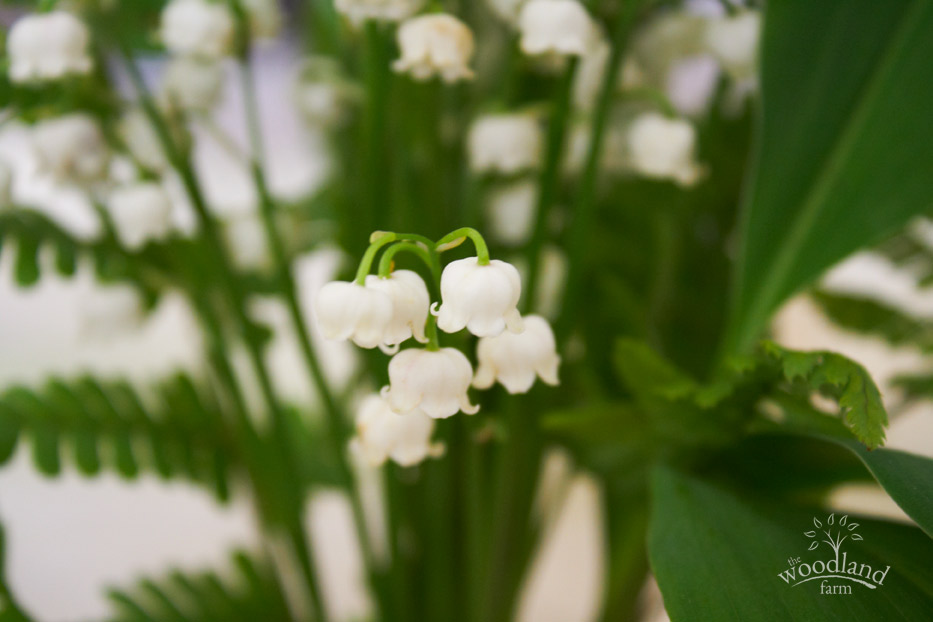 Synonymous with Britain and especially Wales, is Lily of the Valley (Convallaria Major). Lots of people either grow this garden favourite in abundance (its a bit of a bully when it gets going) or struggle to establish it at all. Key to the success seems to be to remember its a woodland plant – highly poisonous – but incredibly scented. Fitting in perfectly with our forest farming approach, we’ve already established a good sward in the understorey and can now look forward to expanding and adding cultivars including the pale pink variety. Perfect for weddings (good enough for Kate and William) we should have Lily of the Valley available in 2015 for May brides.
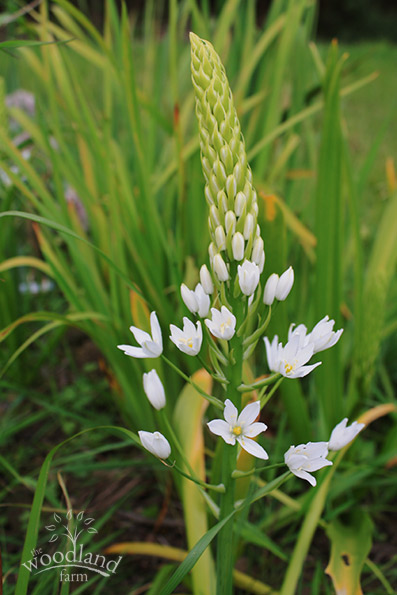
Less well known – but exceptionally beautiful is the bulb Ornithogalum “Star of Bethlehem”. Unfortunately, we found that cows particularly liked munching the tops of these (even though they are said to be poisonous to grazing animals) so my field trials were rather reduced than I hoped – but at least the cows seem ok. Ornithogalum is one of the flowers included in the homeopathic Bach flower remedies so maybe the cows just wanted a little pick-me-up? Of the plants that didn’t get an early munching all seem to be coming into flower and are avoiding the lily beetle and flea beetle damage I’ve spotted elsewhere – so these look a good choice for future having excellent cut-flower value and a long vase life taking up to two weeks to open fully.
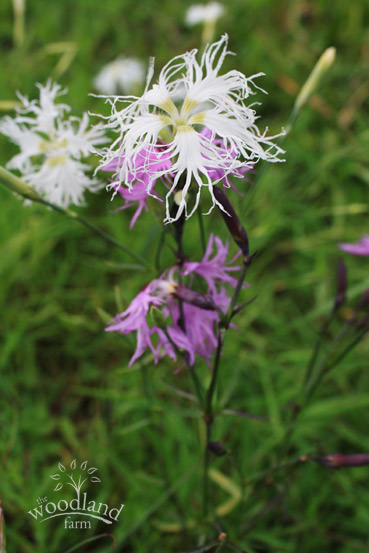
Less satisfactory is the snowflake style of sweet william which resembles ragged robin when it comes into bloom – although we love the delicate little flowers, the plants are generally a bit straggly and stems thin. As the basic sweet williams that you see in the supermarkets are so widely available at dirt cheap prices, we’ll just keep a handful of these going to see how they go when more established.
Looking good generally in the trial beds are the impressive ball-flowers of the allium, irises, anemones and ranunculus, bistort (Persicaria bistorta) which is also very wonderful for bees, aquilegias and of course our beautiful wild flowering cow-parsley which posh florists call Queen Anne’s Lace!